
Now You See Me: Now You Don'T Production design secrets


After an almost 10 year wait, the Four Horsemen are back for the third installment of the Now You See Me franchise. Now You See Me: Now You Don’t drops in theatres November 14th, promising more spectacular illusions and high stake heists. The previous films have wowed audiences with a blend of practical tricks, misdirection, and cinema magic - and this next chapter promises to take it even further. From card tricks to rotating rooms, check out these 5 production design secrets that pull the curtain back on how the team executed the illusions and brought the magic of the Four Horsemen to life.
PD Secret 1. Practical Effects And Leaning Away From VFX
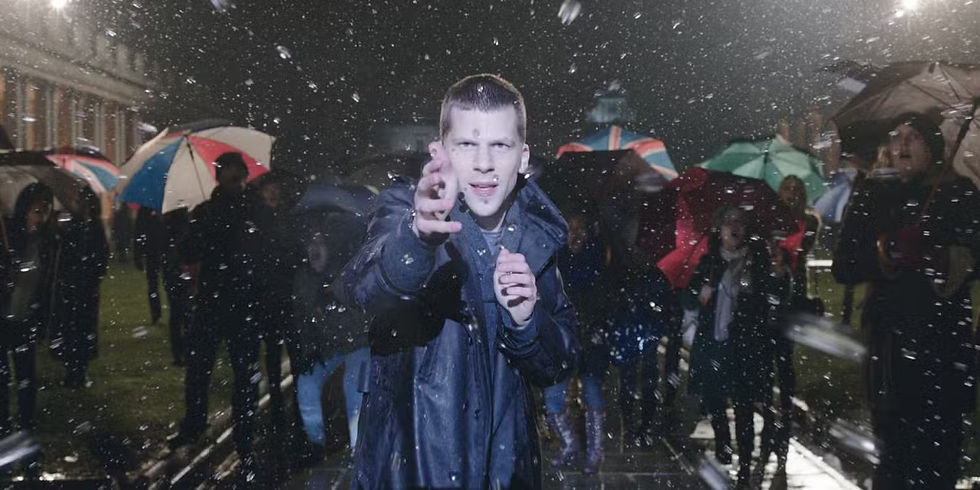
Ruben Fleischer, the director behind Now You See Me: Now You Don’t, set out to create a world that felt more grounded than anything seen in the franchise before. Moving away from the VFX and CGI heavily used in previous movies, he instead leaned into practical effects to shape some of the franchises most ambitious illusions yet. Designed with a greater sense of tangibility, Fleischer’s team spent months engineering detailed, practical sequences that bring the magic to life right in front of our eyes.
PD Secret 2. Drawing Inspiration From Real Locations

The Four Horseman are seen all over the world throughout the franchise, travelling from Las Vegas to Macau, and making their way to Abu Dhabi in this upcoming installment. Each city was brought to life with authenticity, as directors prioritized on location shooting and set design that was rooted in real-world inspiration. The multi-floor Asian marketplace featured in Now You See Me 2 was actually built in London, but drew inspiration from genuine antique stores and herb shops that were seen by production designer Sharon Seymour during shooting in Macau. Yong’s Magic Shop itself was based on an original Macanese magic shop, with much of the display mirroring the real decor from the shop.
PD Secret 3. The Ames Room

An Ames room is built on distortion - it creates an optical illusion that manipulates perspective so that a person’s size will change depending on where they stand. Walls, floors, ceilings, and even windows are trapezoidal instead of rectangular, creating a skewed perspective that warps reality within the frame. Production designer David Scheunemann’s and his team created their own Ames room for the third installment of the franchise, building illusion into not just the story line but the set itself.
PD Secret 4. Building A Rotating Room

For the rotating room sequence, Ruben Fleischer’s team leaned on a classic old-school Hollywood technique; they built a set that was motorized to spin, creating the illusion that characters were able to walk on walls. Fleischer emphasized that he wanted the environment to feel like part of the trick, rooted in reality instead of CGI. The sequence blends practical design with cinematic illusion, building a sense of magic into every frame.
PD Secret 5. Incorporating Magic Into The Sets

Magic wasn’t just a part of the plot for the franchise - it was built into the sets. As well as serving as stylish backdrops, the production design team created sets that integrated real, practical illusions. The first film used an actual trapdoor to allow the characters to escape during their Las Vegas show sequence, grounding the illusion that they were able to disappear into thin air in genuine functional architecture.
Bonus: Learning Practical Magic Tricks

The cast behind the iconic franchise wanted to create something that felt like a genuine illusion, not just a series of edits or camera tricks. To keep the sense of practical magic alive, the actors immersed themselves in the craft and learned many of the card tricks they needed to perform. Jesse Eisenberg + Dominic Sessa spent months learning how to pass cards, and Dave Franco taught himself to perform the card throwing trick we see throughout the franchise in his New Orleans apartment while filming the first movie.
Why is production design so important?
A production designer is head of the art department. On board from the beginning, they work with the director + producers to help bring the writer’s script, director’s vision + producer’s plans together as a visual whole. The production designer researches or "scouts" locations, eventually securing + preparing it for shooting. They budget the cost of materials, track expenses, and typically oversee the art director, set designers, illustrators + scenic painters to develop a specific visual style for a production. From minute details to overarching themes, a production designer must consider every aspect shown on screen, regardless of budget, they must be resourceful and think on their feet.
Now You See Me: Now You Don’t continues to blend illusion into both its storyline and set design. From perfecting the craft of card tricks to building an authentic Macanese magic shop, the franchise has dedicated itself to grounding the trickery we see on screen in reality. These immersive illusions bring the magic of the Four Horsemen that much closer to the audience, and we can’t wait to see what new tricks they have up their sleeves this November.

Written by Olive Pritchard -- Olive is a Marketing Intern at Onni Creative. She is passionate about understanding the industry, experiential marketing, and the intersection of culture and storytelling. As well as being a frequent customer at her local movie theatre, Olive loves to spend her free time travelling with friends and reading.
Curious about more production design secrets from your favorite films and TV shows? Dive into our collection of blogs for exclusive behind-the-scenes insights.
Want to keep up with our art + production journey? Follow us on Instagram and TikTok for project highlights, BTS moments, hot tips, and fun content straight from the art department!
Also, be sure to check out our Art + Production Design work! ✨
Sources


